Our thoughts
This is where we express our thoughts and opinions on the most frequently asked questions. Our opinions are based on over 50 years of experience. We research all possibilities in order to eliminate myths and misinformation. We hope you will get to know our business and trust what we do. We are committed to quality and great service. Join us as we grow and succeed together.
Most common cause of tire wear.
Many factors cause improper wear such as bad suspension, alignment, worn wheel bearings, bent rims, rough or aggressive driving, overloading the vehicle without adjusting the pressure and many more. But the most common cause is improper inflation. There are mixed feelings on what the proper inflation should be for tires. If your vehicle is equipped with the factory OE (original equipment) or equivalent tires. The information on the door jamb sticker and or the manual is a good recommendation for the proper inflation. How ever, if you were to replace the tires with something other than the OE equipment, the door jamb is no longer valid and does not apply. We have found this to be a common mistake far too often as consumers replace the original tires with more heavy duty or even all terrain tires on a passenger vehicle while still using the factory PSI ratings on the door jamb sticker. When replacing OE tires a tire pressure calculator link has been provided for reference.


What does the tire load pressure mean?
We have found through years of experience that if you look at a tire there is a MAX LOAD pressure rating. This is the MAX pressure of the tire when carrying a predetermined amount of weight. The best average that we have found for daily use and activities such as, several persons in the vehicle, carrying groceries, picking up items from the store and so forth. The best starting part would be 75% of the max load pressure on the tire. Example: if the load pressure says 51PSI, then 51 X .75 = 38PSI, an all-terrain tire at 60PSI then 60 X .75 = 45PSI or even a heavy-duty truck tire at 80PSI then 80 X .75 = 60PSI. This is a good starting point and can be adjusted up or down a few pounds depending on application, the needs of the vehicle and of course the weight of the vehicle including the payload. If you are not sure of aftermarket tires, please use the tire pressure calculator when replacing OE tires. Always check tire wear periodically for signs of other issues.

Are there different types of brake fluid?
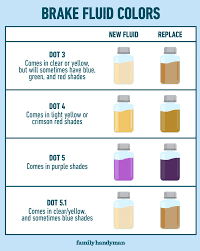
Yes, there are several types of brake fluid. DOT3, DOT4, DOT5 and DOT5.1. Each with a different corresponding boiling point (heat range) per application. The most common used is DOT3 and DOT5.1 for high performance vehicles. Brake fluid is hydroscopic (with the exception of DOT5.1) which means it absorbs moisture from the air which degrades its properties and at some point, will have to be changed or flushed. The limit is >3% moisture content at which point needs to be changed.
Can brake fluid be checked? YES, it absolutely can! You can check the moisture content by using a simple brake fluid moisture tester found online ranging in cost from $10 to $80 for more sophisticated ones. Brake fluid can also be checked for copper content using test strips found online for around $80 or so. Copper content cannot exceed 200PPM (parts per million) as it will degrade the system.
*NOTE the majority of vehicles use DOT3 fluid and have no copper lines or components from the factory. The original equipment are galvanized steel lines with brass or steel fittings and other components made of aluminum. Only the moisture test is required on these vehicles.
*NOTE DOT5 brake fluid is NOT hydroscopic and does not require a moisture test. It is also identified by obviously different colors.
.


Are there different types of automotive batteries?
Yes, there are several types of automotive batteries. Due to the sensitive electronic equipment in vehicles now a days, ALWAYS use the factory recommended battery type for the vehicle. Some vehicles actually require a reset. A professional diagnostic tool is used to inform the vehicle that a new battery has been installed and performs the necessary calibration. Batteries will naturally degrade overtime and should be checked regularly for health. A batteries health condition can be checked by a professional diagnostic tool or a load test.
When should you NOT use the door jamb sticker for recommended tire pressure?
Circumstances when the door sticker pressure may be less relevant include:
- Different Tire Size/Type: If you have installed tires that are a different size (under- or over-sized) or a different construction type (e.g., switching from P-metric to LT-metric tires on a truck/SUV), the original door sticker recommendations become less accurate or even "meaningless".
- Different Loading Conditions: The door sticker usually provides pressure for average, normal load conditions. If you are consistently carrying maximum loads or towing heavy trailers, you may need to adjust the pressure accordingly, usually slightly higher, but never exceeding the maximum pressure listed on the tire sidewall.
- Performance/Racing Driving: Enthusiast drivers or those involved in racing may adjust tire pressures to optimize traction and handling for specific conditions (e.g., a track day), which will differ from the factory-recommended pressures.
In these situations, it is best to consult with a tire professional, refer to load/inflation charts from the tire manufacturer, or use a "chalk test" to determine the optimal pressure for the new setup.
